UNSW Sydney’s Department of Developmental Disability Neuropsychiatry has launched a tool to support the mental health assessment of people with intellectual and communication disabilities.
The web application called MySigns, which is funded by NSW Health, is one of very few e-health tools for people with intellectual disabilities. Despite the fact that they are more likely to experience mental health issues than people without intellectual disability, mental health service access for this group is poor.
Professor Julian Trollor, UNSW’s Chair of Intellectual Disability Mental Health, says there are many e-mental health tools available for the general population.
“It is crucial that we also consider the mental health needs of people with intellectual disability and begin to incorporate these into digital health initiatives,” he says.
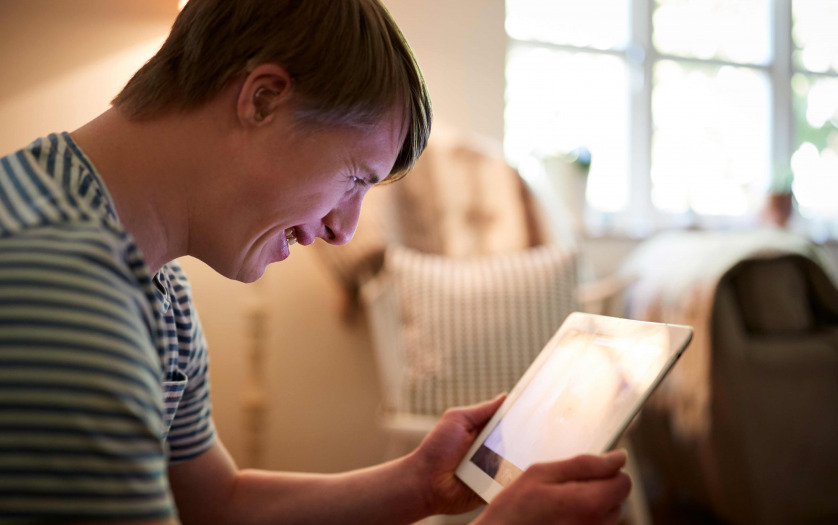
MySigns is designed to be used collaboratively by people with intellectual disability, their carers and mental health clinicians to improve mental health assessment, monitoring and treatment.
“The tool allows carers to upload photos and videos of the person’s unique behaviours, gestures and expressions when they are experiencing certain moods,” says Dr Jenna Zhao, Project Officer. “These can then be shared with the person’s mental health team to facilitate mental health assessment.”
A mental health assessment can be difficult for people with intellectual disability who experience communication barriers because information about their mental health is usually displayed through behaviours, gestures and expressions.
Carers and others who support the person are best placed to detect changes in the person’s mental health and are often most familiar with the person’s behaviours, gestures and expressions.
MySigns builds a visual library of the person’s moods and can be used to help new support staff to learn about how the person conveys information about their mental health.