Top of page
Accessibility

World Braille Day marks key communication tool for millions

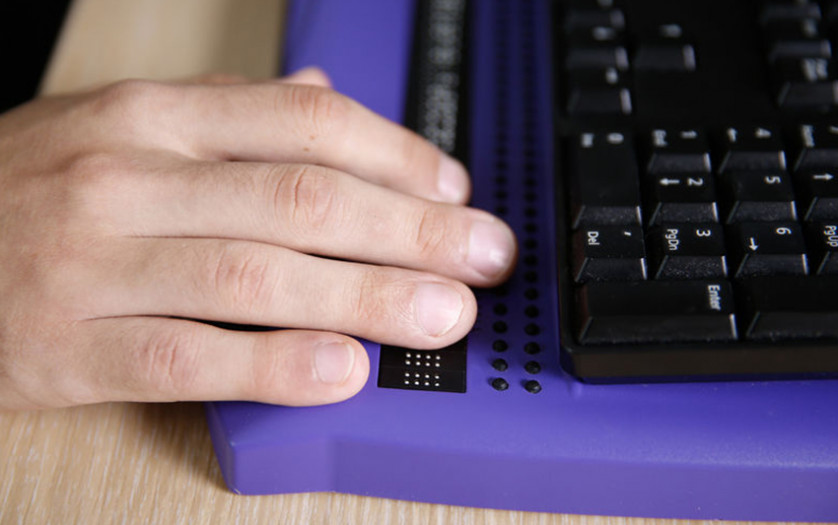
Blind person using computer with braille computer display

Being marked for only the second time ever, World Braille Day on Saturday raises awareness of the importance of the tactile global communication system which helps enable people who are blind and low vision, to realize their full human rights.

It is estimated that approximately 2.2 billion people have a vision disabilities, according to the Worth Health Organization (WHO), a billion of whom have either not had their condition addressed, or whose impairment could have been prevented.

People with vision disabilities are more likely than those without, to experience higher rates of poverty and disadvantage.

Not meeting their needs, or fulfilling their rights, has wide-reaching consequences: vision loss often represents a lifetime of inequality, poorer health, and barriers to education and employment.

Braille brings written language to the forefront as a critical prerequisite for promoting fundamental freedoms. The system relies on touch to recognize alphabetic and numerical symbols, using six dots to represent each letter and number and even musical, mathematical and scientific symbols.

The 2006 Convention on the Rights of Persons with Disabilities, which has advanced the rights and well-being of persons with disabilities, considers Braille essential for education, freedom of expression and opinion, access to information and social inclusion.

The 2030 Agenda for Sustainable Development, adopted in 2015, further pledges that no one will be left behind in the aim to ensure that all human beings can enjoy prosperous and fulfilling lives. 
 

You might also like

Person in wheelchair talking with staff Person in wheelchair talking with staff

Inclusive plan backed for Lake Mac

A strategy addressing barriers to inclusion for people living with…

women in wheelchair leaving a building women in wheelchair leaving a building

Yarra’s policy aims to integrate universal design into everyday life

Yarra City Council’s Universal Design and Disability Inclusion Policy guides all…

Positive Ageing, Access and Inclusion Reference Group community representatives (front L-R) Cindy McDougall, James Carter and Andrew Leeman are backed by Cr Jo Beard, and Council’s Assets Co-ordinator Maria Caro, Economic Partnership Officer Kellie Duynhoven, Infrastructure Projects Officer Dean Finlayson, Rural Access Officer Patrick Caruana and Positive Ageing, Access and Inclusion Co-ordinator Belinda Rowbottom. Positive Ageing, Access and Inclusion Reference Group community representatives (front L-R) Cindy McDougall, James Carter and Andrew Leeman are backed by Cr Jo Beard, and Council’s Assets Co-ordinator Maria Caro, Economic Partnership Officer Kellie Duynhoven, Infrastructure Projects Officer Dean Finlayson, Rural Access Officer Patrick Caruana and Positive Ageing, Access and Inclusion Co-ordinator Belinda Rowbottom.

New group to help make Shire accessible

Community members and Corangamite Shire staff are collaborating to ensure…

people at Music Festival people at Music Festival

Council backs disability access, planning and live music

Yarra’s Deputy Mayor, Councillor Sharon Harrison, attended the Municipal Association…